• Girls Burn Brighter by Shobha Rao

    When you read this story, you’re going to be taken aback. You’re going to assume this is the story about young women who are kidnapped and rapped and treated like dirt and you’ll feel this overwhelming need to protect and speak out for these women. What you won’t understand is that this life is a reflection of hardship. For some people, hardship is finding a job in a career that they dream to get. But for Savitha and Poornima, hardship is survival, of strength, of the power of the female friendship.

    Here’s a little bit more about the book

    34275212Poornima and Savitha have three strikes against them: they are poor, they are ambitious, and they are girls. After her mother’s death, Poornima has very little kindness in her life. She is left to care for her siblings until her father can find her a suitable match. So when Savitha enters their household, Poornima is intrigued by the joyful, independent-minded girl. Suddenly their Indian village doesn’t feel quite so claustrophobic, and Poornima begins to imagine a life beyond arranged marriage. But when a devastating act of cruelty drives Savitha away, Poornima leaves behind everything she has ever known to find her friend.

    Her journey takes her into the darkest corners of India’s underworld, on a harrowing cross-continental journey, and eventually to an apartment complex in Seattle. Alternating between the girls’ perspectives as they face ruthless obstacles, Girls Burn Brighter introduces two heroines who never lose the hope that burns within.

    I absolutely loved this book. From the beginning of this story, I couldn’t put down the book. It captured me the moment I started reading it and continued to enrapture me and then abandoned me right at the end! I could feel my hands ball up into fists while I read some of the scarier parts and I also felt the need to cry when everything seemed hopeless towards the end.

    The story takes place in two different perspectives. First, it starts together with the main characters and their lives in Indravalli in Southern India. Poornima is a burden to her father for being born a woman and therefore he’s looking for someone to marry her off to. Savitha is poorer than Poornima so she spends most of her time making money for her family. From the beginning you can feel the prejudice for these families because of their class and their gender. Being women meant having to pay out dowries when they got married. Being women meant obeying your husband and not thinking for yourself. I found myself wondering if this was real life, if what was going on was a frequent occurrence in the lives of many Indian women.

    But like I said in the beginning of this review, don’t interpret what you see as weakness.

    When Poornima and Savitha meet for the first time, Savitha was working for her father as a weaver while Poornima kept her focus on being the most agreeable bride you’ve ever seen. Both of these girls come together to share a few meals and a lifelong friendship is born. Suddenly, something happens (I won’t say what) that causes these two girls to separate.

    And it was the small amount of time spent with each other that fueled their passion to escape their fates. They were always recalling moments together and remembering their friendship fondly. It was those moments and recalling those memories that helped Poornima find her way towards Savitha.

    From this point on, the story gets more and more frustrating as you see Poornima being sold off to her new husband and Savitha runs away. The story diverges at this point separating them from themselves as well as that childhood innocence. The book is even strategically written in parts, one dedicated to Savitha’s journey and the other to Poornima.

    I interpreted all the slings and arrows Savitha and Poornima faced as hurdles in their life. They could have easily knelt down and accepted whatever life they were given, but instead they ran away. They were cunning. They did their best to learn skills and people and escape their fates. Every chapter and every event felt like watching an episode of Maguyver where they took a bobby pin and some dried toothpaste and made a bomb to escape. It was like watching Bear Grills eat bugs and drink his own pee, except for some reason people can’t leave women alone.

    While Savitha is bought and sold off by various people, Poornima’s story seems to be more focused on finding Savitha. I thought it was strange that it was one friend finding the other and the other seemed to just reminisce in hopes of using her memories as comfort. I really wish there was a bigger effort from Savitha to find Poornima and perhaps there wouldn’t be this ache in my heart right at the end.


    I wasn’t a fan of the ending, I’ll admit. I can feel myself feeling the same kind of anticipation that Poornima was feeling being so close to Savitha, but the ending came too quickly for me. It almost felt rushed and the final part (belonging to Poornima) didn’t reflect the same way the rest of the book did.

    It was nebulous and maybe the intention here was to give you hope the same way these girls carried hope for themselves. All throughout the novel you’re so hopeful for these girls. You pray that they’ll be able to escape the lives that they found themselves living. You think that they’ll finally escape and finally be together again, but you never know. I think that stands as a pretty good metaphor for life. You don’t know if you’ll ever see that friend again, but you know you carry that flame and you’ll try to never let it go out.

    • Hardcover, 320 pages
    • Publisher: Flatiron Books (March 6, 2018)
    • Rating: 5/5 stars
    • Buy Girls Burn Brighter on Amazon

    Simone and Her Books is a participant in the Amazon Services LLC Associates Program, an affiliate advertising program designed to provide a means for sites to earn advertising fees by advertising and linking to Amazon.com. This in no way affects my opinion of the above book.

    I received a copy of this book from Netgalley for free in exchange for an honest review. My opinions have not been influenced by the publisher or the author.


  • I kind of went into this book without knowing what it was going to be about. The whole time, I couldn’t stop thinking about the title and how there’s this famous line from the comedy Step Brothers. It goes:

    catalina-wine-mixer

    And maybe this gif can explain exactly how I feel about this book and the events that took place. Perhaps it will do the same for you.

    33257651Elsa Fisher is headed for rock bottom. At least, that’s her plan. She has just been fired from MoMA on the heels of an affair with her married boss, and she retreats to Los Angeles to blow her severance package on whatever it takes to numb the pain. Her abandoned crew of college friends (childhood friend Charlotte and her wayward husband, Jared; and Elsa’s ex-husband, Robby) receive her with open arms, and, thinking she’s on vacation, a plan to celebrate their reunion on a booze-soaked sailing trip to Catalina Island.
    But Elsa doesn’t want to celebrate. She is lost, lonely, and full of rage, and only wants to sink as low as the drugs and alcohol will take her. On Catalina, her determined unraveling and recklessness expose painful memories and dark desires, putting everyone in the group at risk.

    At only 240 pages, I was worried this was going to be another one of those books where a young girl comes to New York with a lot of promise and only finds drugs and sex are what help her cope with her quarter-life crisis. I’m honestly so tired of stories that have people moving to New York and becoming drug-addled without a hint of trying to do anything for the big dream. However, this is completely opposite of that.

    In fact, she was doing what she set out to do. She was working for the place of her dreams before she started having an affair with her boss. She then loses her job and travels back to California. While I never had an affair with my boss, I know the kind of upset you feel when you had a job one day and then it’s all completely taken away from you. There’s a small amount of depression that sets in and for Elsa, it comes with a nice sidecar of pain killers.

    I kind of put this on the same level as Bridesmaids or any of those female groups that get together after a long time. They learn that they’re different or they learn that they’ve grown apart. I can imagine someone like Amy Schumer or Kristin Wiig playing Elsa if they adapted this to a movie. I can imagine her fiddling with pill bottles in the bottom of her purse wearing her best sequined dress and giant black sunglasses. I can see her waking up next to a random stranger hoping that they didn’t take it too far. I can see her even modeling bathing suits to the underage bellhop in the hotel she’s staying in. Like all those female friendship movies, there’s always someone that doesn’t care enough or only cares about themselves. I think that’s the perfect analogy to explain Elsa.

    However, unlike those movies, Elsa doesn’t really learn anything other than the fact that she’s not her friends. She doesn’t want the same things in life and she doesn’t care about getting back to reality. She’s also deeply depressed. While you’re reading the story, Elsa goes back and rehashes on the events leading up to her affair, her job in New York. She talks about the relationship she has with her friends, with her ex-husband, and even her mom. I think it’s interesting how “rock bottom” can feel like the catalyst for change and sometimes it can feel like a good time to break open a bottle of booze. For Elsa, it’s the latter.

    Even as she finds her best friend no longer cares about her and she has no one to looked to, she finds a way to be self-destructive. She doesn’t speak to anyone about what happened to her in New York and she doesn’t look for help. All she wants is to do is find those drugs to help her fall darker into her own pit.

    To me, this didn’t read like a depressing story of a young woman on the verge of a breakdown. In actuality, all the characters in this story have something going on in their lives they’re not talking about. Since the story takes place in Elsa’s point of view, that’s all that you’re getting. However, the characters are super well-developed and you care more about them than you do about Elsa.

    Speaking of writing, I thought this was eloquent and easy. The characters felt natural and almost real. I think the only thing I could comment on was how unfeeling and cold Elsa was. I guess that’s what the author was trying to do here. She was trying to make you feel for everyone and feel a little bit for Elsa, but in the end, you won’t really care for her very much. It’s obvious even with the way Liska Jacobs ended the book. She didn’t care for her friends and she clearly doesn’t care about herself, so why would the reader want to care about her too?

    I received a copy of this book from NetGalley for free in exchange for an honest review. My opinions have not been influenced by the publisher or the author.

    • E-galley: 240 pages
    • Publisher: FSG Original
    • Rating: 4/5 stars
    • Buy Catalina on Amazon

    Simone and Her Books is a participant in the Amazon Services LLC Associates Program, an affiliate advertising program designed to provide a means for sites to earn advertising fees by advertising and linking to Amazon.com. This in no way affects my opinion of the above book.

  • I’m not typically a fan of giving books one star because there are some themes and merits that a book may have that I don’t want to discount. However, I really didn’t like this book at all.

    Let’s get this over with

    36644043Shy, introverted Imogene Abney has always been fascinated by the elite world of prep schools, having secretly longed to attend one since she was a girl in Buffalo, New York. So, shortly after her college graduation, when she’s offered a teaching position at the Vandenberg School for Boys, an all-boys prep school in Westchester, New York, she immediately accepts, despite having little teaching experience—and very little experience with boys. 
    When Imogene meets handsome, popular Adam Kipling a few weeks into her tenure there, a student who exudes charm and status and ease, she’s immediately drawn to him. Who is this boy who flirts with her without fear of being caught? Who is this boy who seems immune to consequences and worry; a boy for whom the world will always provide?

    As an obsessive, illicit affair begins between them, Imogene is so lost in the haze of first love that she’s unable to recognize the danger she’s in. The danger of losing her job. The danger of losing herself in the wrong person. The danger of being caught doing something possibly illegal and so indecent. 

    Exploring issues of class, sex, and gender, this smart, sexy debut by Corinne Sullivan shatters the black-and- white nature of victimhood, taking a close look at blame and moral ambiguity.

    I went into this story hoping that it would strongly resonate with me; a young woman who is introverted and a little scared of the world being thrust into the private school life with a job that will help grow my career. Of course I would never sleep with a student, but I felt a lot for the way that Imogene felt. I do pick at my skin because I’m insecure about the way I look. Things, in my mind, need to be perfect. I do spend a few hours in bed, but not because I’m sad or lonely. I do it because it’s my refuge and I thought I could relate to Imogene that way. However, that was the extent of my connection with this character.

    First off, I really wish this book was more about the whole illicit student/teacher relationship where the young man falls in love with the teacher rather than the other way around. While I get what the author is trying to do here with this particular set up, I don’t think that it’s good for women to be written this insecurely. Yes, we’ve all shamefully stalked our exes online, but why build it out to this extent? Why make her pine for a boy who just wants to have sex with her? Where is her sense of self? Where is her “girl power?” Perhaps instead if they did love each other and they were up against the odds of the school, their families, their friends, then this would be the story of whether or not it is “indecent” to love a student. It feels like she has no control and doesn’t want any control over her own actions and emotions. She just wants to play the victim in her own life rather than stand up for herself.

    Speaking to that, there was pretty much no growth. Imogene, the main character, goes on doubting herself and the relationship she has with her 17-year-old love interest, Kip, and trying to understand why a 17-year-old rich kid who plans on going to Yale would want her. I don’t mind that a student and a teacher has an affair. That’s fodder for some good reading material, but I didn’t relate to her feelings for him. I didn’t understand why she put herself in bed after having sex with him. I don’t understand how she’s not able to do her job while she’s having sex with him. I don’t understand the obsession and trust me, I’ve had my fair share of obsessions.

    Then on top of that, why would he want to be in a relationship with her? There was no signs that this guy was in any way interested in her outside of the occasional sex. I mean it. I’m pretty sure any person could read this book and see the signs were so clear that he was only in it for the sex and nothing else. Is it considered victimhood if you’re posing as your own victim? I don’t know how dense you need to be to see that this guy doesn’t want anything from you than a good time.

    And then there were the boys that were interested in her. Men who were in her age range (early to mid 20s) who wanted to take her out on a date. Men who wanted to be seen in public with her. And yet, she’s seen pining over him. She’s stalking him online. She’s stalking women he’s friends with online because her insecurity levels are so high that that is all she can muster. Even after they were found out and this ridiculously long proceeding of figuring out who did what and what it all meant, she’s still crying about him. Why?

    Also, it felt like Imogene was a mash up of all the fears and doubts any woman would ever feel about themselves. She hates the way she looks in the light, but she’s willing to go down on her knees and give oral sex to Kip. She’s extremely judgmental of everyone else around her; her coworkers, her friends, her students, the teachers, even her own family. I don’t get why this girl hates on everything, doesn’t get close to anyone, and doesn’t grow in any way from the personal experience?

    I’m sorry, but I don’t like people who are like this. I don’t like people who aren’t able to look inwardly at themselves and see a chain of behavior that needs to be resolved. She went to therapy for four years to understand why she picks on her skin and that doesn’t change anything about her habit. She just seems unable to be a better person and I personally feel that this shouldn’t be glorified even for the sake of the whole victimhood theme.

    It really pained me to read this. It took all that I could to not want to put this down. Eventually, I skimmed the last good chunk of this book because I just didn’t care anymore. I may have been just as shy and scared when I was 22, but I wasn’t imagining things that weren’t there and having illicit affairs with students I was teaching. I was more determined to grow my career at that point and date men who were serious about themselves. Then again, I don’t date 17-year-olds who go to boarding school and plan on sailing ships at their family’s legacy school.

    I received a copy of this copy of Indecent from NetGalley for free in exchange for an honest review. My opinions have not been influenced by the publisher or the author.

    • Hardback: 304 pages
    • Publisher: St Martin’s Press (March 6, 2018)
    • Rating: 1/5 stars
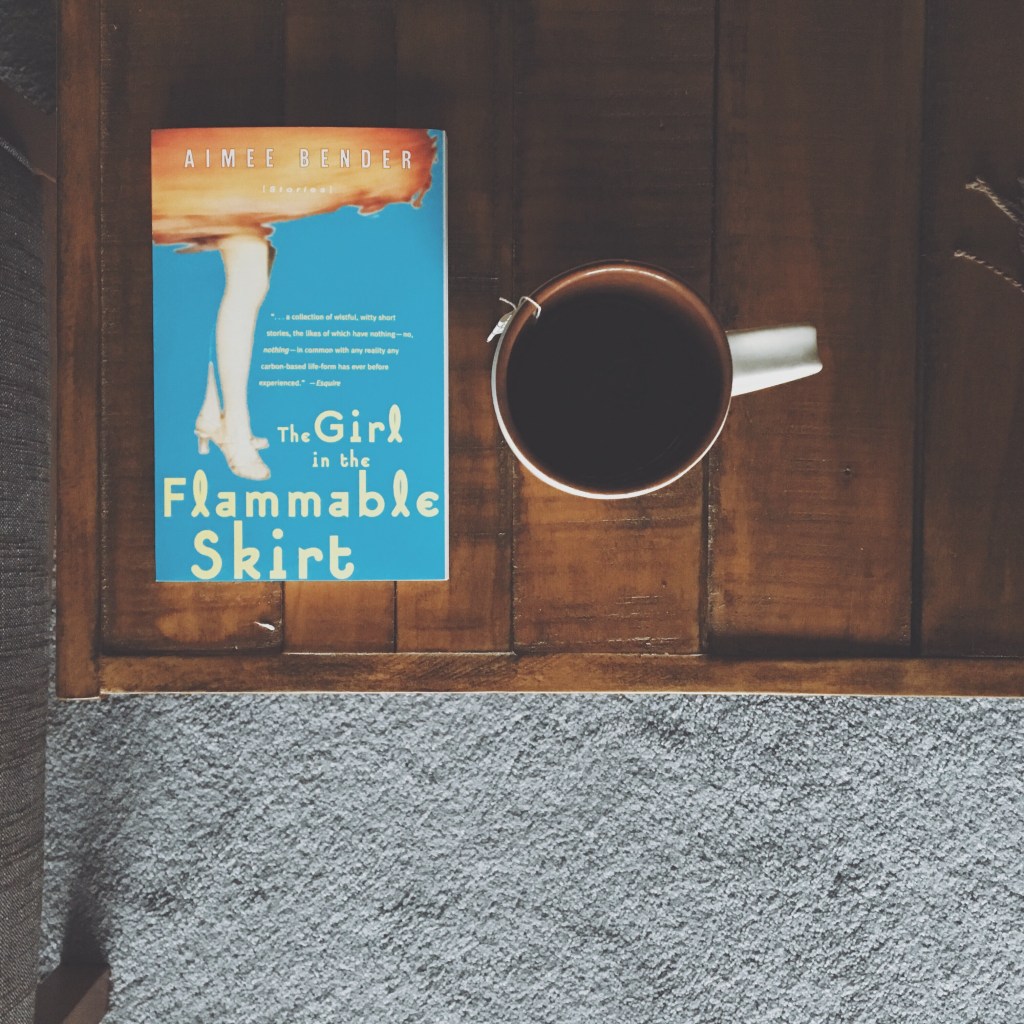
  • The Girl in the Flammable Skirt by Aimee Bender

    I went into reading this book without much premise on what it’s about. I received it as a part of my Capsule Books box hoping to read something that will nestle me into my chair and take me on a grand adventure. Instead, I read a collection of short stories that all shared one strange element or another, but ultimately played into the idea of loving someone for who they are. Let’s get right into it.

    Here’s some more about the collection

    A grief-stricken librarian decides to have sex with every man who enters her library. A half-mad, unbearably beautiful heiress follows a strange man home, seeking total sexual abandon: He only wants to watch game shows. A woman falls in love with a hunchback; when his deformity turns out to be a prosthesis, she leaves him. A wife whose husband has just returned from the war struggles with the heartrending question: Can she still love a man who has no lips?

    Aimee Bender’s stories portray a world twisted on its axis, a place of unconvention that resembles nothing so much as real life, in all its grotesque, beautiful glory. From the first line of each tale she lets us know she is telling a story, but the moral is never quite what we expect. Bender’s prose is glorious: musical and colloquial, inimitable and heartrending.

    Here are stories of men and women whose lives are shaped–and sometimes twisted–by the power of extraordinary desires, erotic and otherwise. The Girl in the Flammable Skirt is the debut of a major American writer. 

    The book starts with the story about a woman who’s lover is devolving. You think that this was some sort of Benjamin Button thing, but what you’re seeing is a man who is now an ape and progressing back towards that single-celled organism everyone says we’re evolved from. While you’re reading this woman trying to cope with a man who is an ape, you also hear about her struggle to love someone like this. What do you do when something unfortunate happens to your lover? I’m pretty sure you would understand the character’s POV in this case.

    This is what you come across while reading The Girl in the Flammable Skirt; stories that don’t quite make sense but deep down you understand where the characters are coming from. It was like reading Murakami with a little performance by Miranda July with the voice of Ernest Hemingway.

    And this is the central theme of all the stories you read here. Each one has some quirk about it. It can be about a woman trying to fall back in love with her husband after he returns from war without his lips. It could be a story about a man who develops a hole in his torso. It could be the woman who falls in love with a thief and steals a ruby ring that turns the ocean red. These quirks are little, but remind me so strongly of Murakami; the magical realism of something so inane yet so impactful on the characters’ lives. It’s almost inconsequential how it shows up, but it impacts them the most throughout the story.

    But overall, I wasn’t that big of a fan of this story. It was fun and interesting to see the different ways these characters confront certain situations, but I kind of shrug my shoulders at this. It was a fun read, but not one of my top favorites and kind of meh. I wish I was so enamored by it, but perhaps I’m the wrong person to read this. I’ve been reading magical realism for a while and this book was written in the 90s probably during a time when this kind of writing was considered more poetic than anything else. Perhaps you’ll like it. I’m not sure, but for me it was okay. Good stories. Good times. Like the roar of a fireplace; warm, relaxing, and ultimately extinguishable.

    Simone and Her Books is a participant in the Amazon Services LLC Associates Program, an affiliate advertising program designed to provide a means for sites to earn advertising fees by advertising and linking to Amazon.com. This in no way affects my opinion of the above book.

  • Capsule Books Unboxing

    This is my first time unboxing a Capsule Books box. I thought the idea was quite an interesting one and I definitely wanted to get my hands on one to see what it’s all about.

    Capsule Book boxes take on reading in a different way. Instead of thinking of themes between books, you can pick your box by feelings. For the winter, the choices are Roar of the Fireplace, Alone at a Party, and Frozen Over.

    I chose Roar of the Fireplace, because it’s the feeling of sitting at home with a big glass of wine and thinking about all those little things you might have messed up. It felt like this was right up my alley in terms of lifestyle. I love ruining a cozy moment with my crazy brain. You can read more about that box here.

    Each box comes with three books, a little note going deeper into your box choice, and a few little extras. For this box, I also received a little bookmark as well. The box also includes a pre-stamped envelope for you to send the news about Capsule Books to a friend. It’s not even just a postcard, but a little notecard in a kraft envelope. So cute!

    Here’s a little bit more on the books I received in my box:

    The Girl in the Flammable Skirt by Aimee Bender

    A grief-stricken librarian decides to have sex with every man who enters her library. A half-mad, unbearably beautiful heiress follows a strange man home, seeking total sexual abandon: He only wants to watch game shows. A woman falls in love with a hunchback; when his deformity turns out to be a prosthesis, she leaves him. A wife whose husband has just returned from the war struggles with the heartrending question: Can she still love a man who has no lips?

    Aimee Bender’s stories portray a world twisted on its axis, a place of unconvention that resembles nothing so much as real life, in all its grotesque, beautiful glory. From the first line of each tale she lets us know she is telling a story, but the moral is never quite what we expect. Bender’s prose is glorious: musical and colloquial, inimitable and heartrending.

    Here are stories of men and women whose lives are shaped–and sometimes twisted–by the power of extraordinary desires, erotic and otherwise. The Girl in the Flammable Skirt is the debut of a major American writer.

    SPHINX by Anne Garreta

    Sphinx is the remarkable debut novel, originally published in 1986, by the incredibly talented and inventive French author Anne Garréta, one of the few female members of Oulipo, the influential and exclusive French experimental literary group whose mission is to create literature based on mathematical and linguistic restraints, and whose ranks include Georges Perec and Italo Calvino, among others.

    A beautiful and complex love story between two characters, the narrator, “I,” and their lover, A***, written without using any gender markers to refer to the main characters, Sphinx is a remarkable linguistic feat and paragon of experimental literature that has never been accomplished before or since in the strictly-gendered French language.

    Sphinx is a landmark text in the feminist and LGBT literary canon appearing in English for the first time.

    The Universe of Us by Lang Leav

    Lang Leav presents a completely new collection of poetry with a celestial theme in The Universe of Us.

    Planets, stars, and constellations feature prominently in this beautiful, original poetry collection from Lang Leav.  Inspired by the wonders of the universe, the best-selling poetess writes about love and loss, hope and hurt, being lost and found.  Lang’s poetry encompasses the breadth of emotions we all experience and evokes universal feelings with her skillfully crafted words.

    So far, I’ve only read The Girl in the Flammable Skirt by Aimee Bender and I’m already blown away by how awesome this box is. This book, one of which I’ve never heard of in my life, is able to better encapsulate the feeling of being inadequate and insecure with yourself while trying to love someone else. It’s an incredible collection of short stories and I can’t wait to get into the two others. I’ll be sharing what those are below.

    With these boxes, you only get three books every season, so it’s not too much of a burden on your TBR if you have a lot of  books to read. Also, you can take 15% off your first box  by using SIMONE15 at checkout.

    Simone and Her Books is affiliated with Capsule Book boxes. This is an advertisement post, but the opinions and reviews of these books are completely honest and my own thoughts. Capsule Books doesn’t have any influence on the posts written about it.

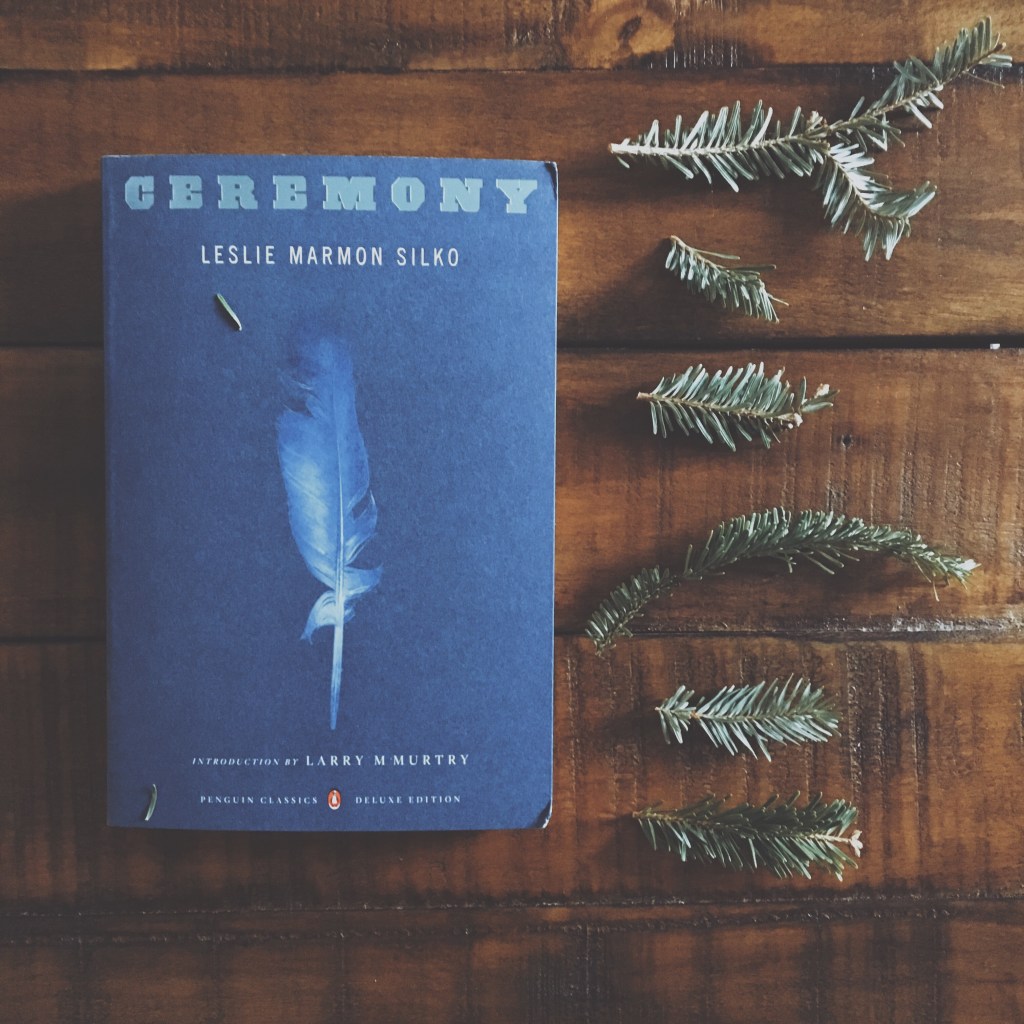
  • Ceremony by Leslie Marmon Silko

    I kind of went into this book blindly. Because a friend was doing a challenge to read books by Native American authors. With very little knowledge of what this book is about, I read it. I could write a whole dissertation on the different themes of this novel. It was surprisingly short and compact for what it was conveying and I loved it.

    First, let’s talk about what this book is about

    Tayo, a young Native American, has been a prisoner of the Japanese during World War II, and the horrors of captivity have almost eroded his will to survive. His return to the Laguna Pueblo reservation only increases his feeling of estrangement and alienation. While other returning soldiers find easy refuge in alcohol and senseless violence, Tayo searches for another kind of comfort and resolution. Tayo’s quest leads him back to the Indian past and its traditions, to beliefs about witchcraft and evil, and to the ancient stories of his people. The search itself becomes a ritual, a curative ceremony that defeats the most virulent of afflictions—despair.

    I really regret not looking into this one some more because while it was really interesting to read, it was pretty dense writing. It was also stylized in a way that made it quite confusing in the beginning. Once I finally got a grasp of what was going on, I approached the book more cautiously.

    The story is told in flashbacks, in present day events, and in the ceremony to help Tayo heal from the atrocities of his life and the war. There weren’t chapters in the book, but each section was determined by the crazy indentation the paragraph starts with. The one thing I loved from this method were the poems. Every few pages, Leslie Silko included some stories written in a poetic-style about a hummingbird and a fly trying to bring water to their draught-filled land. The lengths these animals were going was a direct reflection of Tayo and his struggle.

    Despite some strange stylistic choices the author made, there were tons of themes going on in this book. I think the easiest way to explain them all would be to list them and cite how the book tackled it.

    Being a war veteran

    Of course there are the themes of being Native American and how that’s affected Tayo and the Laguna people, but something else I thought might be interesting to explore is being unaccepted by America, but fighting a foreign war for them. Don’t you find it a little hypocritical to fight a war for a country that doesn’t even acknowledge you as a citizen? Force you to live on land in the middle of the desert with nothing to grow or harvest. I digress.

    For Tayo, the horrors of his time in the Marines were not only met with having to kill a soldier, but also watching your cousin die, being a captive of Japanese army, and facing a point of insanity. When he returned from WWII, he struggled with finding himself. Who was he when his cousin and his uncle were both dead? Who was he before the war took him? He would vomit and sleep and imagine his uncle and his cousin, Rocky, were somehow present after they had died. He was hallucinating and struggling to stay sane when the tribe’s medicine man suggested he visit another medicine man that lived high in the hills. There he performed the ceremony to help him rid the “witchery” holding him hostage.

    The best part of this novel that I found intriguing was the “taste” of being American. Emo, another Laguna native who went to the war, found the experience to be enlightening. While he spent his days in the bar, he would talk about how great the war was, how people treated him for wearing his uniform, and how all of that disappeared the moment he returned to the reservation. For Emo, the American life was something to be desired, but difficult to grasp because of the color of his skin. He built resentment for being Native American and resented anyone who didn’t appreciate the American life. I think this also contributed to Tayo’s frustration with figuring out who he was.

    Being bi-racial

    There was a lot of discussion about Tayo’s background. His mother was Native American from the Laguna tribe he was born into, but he didn’t know who his father was. I think there was mention of him being part white and part Mexican as well as part Laguna. They do go into his mother’s background a little more in the book, but because of the choices his mother made, the family he lives with doesn’t accept him. He’s not accepted by the other Laguna people, and he’s considered a half-breed who’s mother sold herself out to please white men.

    I don’t know what it’s like to be bi-racial, but I do know what it’s like to be both American and Asian. Being flung between two cultures and trying to be accepted by both is not an easy task. You want to be loyal to both sides, but when one tribe doesn’t like you and the other doesn’t accept you, where do you go? Not white enough to be white. Not Native American enough to be Laguna.

    I think Tayo never talked about this with himself. He never explored what made up his background and this contributed to the feelings he had when he returned from the war. He fought a war for Americans, but then returned to that same reservation he grew up in. No one applauded him for being a veteran and everyone outside of the reservation just saw another “Indian.” I think this ultimately contributed to him going slightly insane.

    Returning to your roots

    There’s probably other themes that I’m missing here, but I don’t want this post to get too long. The final theme I wanted to chat about was returning to your roots. While be chastised for being born a numerous number of races, I always felt like there was one that will always call to you. You’ll gravitate towards it and you’ll find peace there amongst the people who love you for who you are.

    For Tayo, this journey began when he returned from the war. He enlisted to fight in a war for a country that doesn’t even accept Laguna as citizens of the country. However, he and many other Native Americans enlisted for the opportunities. What they found was a place of respect. People loved him because he was a soldier, not a Native American. They received the best because of their uniform.

    But what I think he lost was his own sense of self. He struggled with it his entire life by the ridicule of his family and his friends. He was never accepted and now he was about to fight in a war for a country that didn’t accept him. When he returned, it only took the power of the ceremony to help find who he is and dispel him of the frustration of being a fringe human being. He found love in a woman who also was half and she helped him find peace and growth through her love.

    This book was an interesting story about a man who had no idea who he was, what he stood for, and what really made him the person he is. By returning to his roots, he was able to find pieces of himself again. He was able to contribute and help grow the land and the people around him. Of course he didn’t get rid of the people who didn’t accept him, but what he did find was a way to keep those thoughts away from who he truly is.


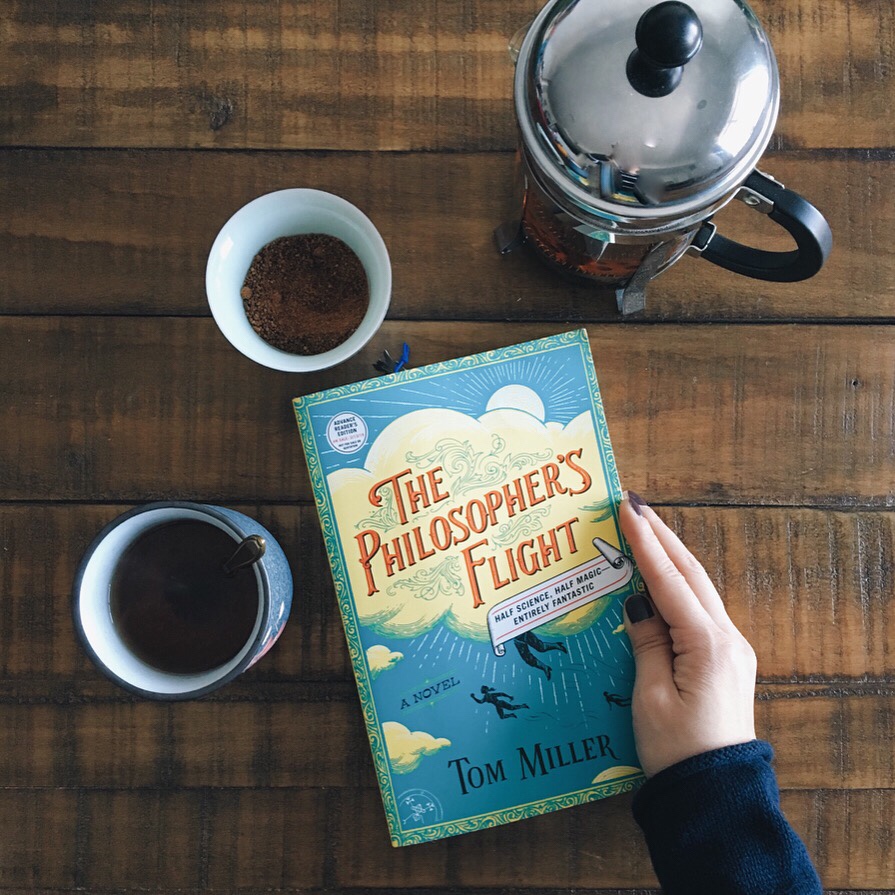
  • The Philosopher’s Flight by Tom Miller

    I’ve always been worried that if Hogwarts was a real place and people could get into it that I would be one of the unlucky people who wouldn’t get in. Let’s also keep in mind that I’m American and that already disqualifies me.

    But what if magic was studied instead of inherited? What if you stumbled across a sigil while playing in the sandbox and you realized you have a predilection for something called “empirical philosophy?” What if you were a man and you realized that this is a very female-centric area of study? What would you do then? This is one story from one man who answered all of these questions for himself.

    A little bit more about the story

    Eighteen-year-old Robert Weekes is a practitioner of empirical philosophy—an arcane, female-dominated branch of science used to summon the wind, shape clouds of smoke, heal the injured, and even fly. Though he dreams of fighting in the Great War as the first male in the elite US Sigilry Corps Rescue and Evacuation Service—a team of flying medics—Robert is resigned to mixing batches of philosophical chemicals and keeping the books for the family business in rural Montana, where his mother, a former soldier and vigilante, aids the locals.

    When a deadly accident puts his philosophical abilities to the test, Robert rises to the occasion and wins a scholarship to study at Radcliffe College, an all-women’s school. At Radcliffe, Robert hones his skills and strives to win the respect of his classmates, a host of formidable, unruly women. 

    Robert falls hard for Danielle Hardin, a disillusioned young war hero turned political radical. However, Danielle’s activism and Robert’s recklessness attract the attention of the same fanatical anti-philosophical group that Robert’s mother fought years before. With their lives in mounting danger, Robert and Danielle band together with a team of unlikely heroes to fight for Robert’s place among the next generation of empirical philosophers—and for philosophy’s very survival against the men who would destroy it.

    I honestly and truly wished I loved this book. I felt like there’s a lot of potential for it being a great series, but after only reading the first novel from both the author and the series I wasn’t all too excited. This was definitely more like Harry Potter where magic (also known as Empirical Philosophy) exists alongside the very real world. This “magic” is not inherited, but learned and anyone can basically pick it up. It requires the use of sigils and specific minerals. For example, using a particular sigil with cornmeal will help you to fly and how you write your sigil will determine how well you fly. It’s a practiced art and you don’t need a certain birthright to do it.

    I will say that the story did hold my attention and there definitely was some practical use of the philosophy. But a lot of what was happening in the book felt like a direct reflection of what’s going on today. Women being the dominant gender to use Empirical Philosophy, Robert Weekes is one of only three men at his college. He’s constantly teased and talked down to because men just don’t do Empirical Philosophy. It just feels like a role reversal for what’s happening nowadays; women being overlooked because they’re women.

    The bad guys in this book are called “Trenchers.” These dudes remind me of the extreme right movements in America right now. They are constantly fighting against Empirical Philosophy and trying to make it illegal. They think it’s unnatural and the women kill their babies. It’s against God and the Bible and people who study it are abominations. They’re out trying to kill philosophers so that their numbers dwindle and they disappear. It really reminds me of the news and everything that’s going on recently. There was even a march where philosophers went down to Washington DC to march for their rights to use this philosophy.

    I think this really bothered me the most in this story especially since it’s fiction and really could draw from anything and it’s just a reflection of what’s going on today.

    Being that this is the first fantasy novel, I feel like a lot of this story was just explaining the universe as well. There was a lot of history that coincided with the very real United States history. The wars being fought are also fought by philosophers. There was a lot of explaining the philosophy, what it does, how it works, how it can be manipulated. I feel like I was in a class listening to a lecture about Empirical Philosophy than actually seeing it in action.

    When you do see it in action, it’s great. The fighting against Trenchers and even The Cup was fun to read. However, reading passage after passage of Robert learning how to fly at a certain speed, his training regiment, or reading about him carry 100-lb bags for practice all just seemed to keep the story very still. The pacing was pretty slow and even though every few chapters had headers with how much time went by, it feels like no time at all.

    d310eacf-2fda-4931-ae88-2c5517f1a7a1

    I get with new fantasies there’s a lot of groundwork to cover. There’s a lot of creating how each sigil worked and how the transporters moved and how flight paths can be determined. I don’t want to discredit this novel because it’s the first and the first always shares some of that knowledge. I just wish there was more excitement or something to move the story forward.

    Reading about a young country boy going to college in a big city for the first time is basically all I’m getting from this story. Aside from the fact that he can practice philosophy which is uncommon for men, it really just reads like someone’s first adventures being alone and falling in love and learning new skills that he wouldn’t have learned before. There’s definitely growth for everyone and everyone miraculously knows what they want in life, but it took a long while to get there and a lot of reading.

    We learn a lot by the end that will probably set you up for the next one, but really it could have happened right in the middle of the book rather than the end. Honestly, at less than 100 pages left in the book I was worried that nothing would happen at all and that I’d have to wait for the next book. Perhaps then we’ll see a lot more action for Robert and can chalk up this first book to first-time jitters.

    I’m going to be looking out for the second book in the future. I really want to like this book and that’s why I’m rating it with three stars. The book kept me interested albeit a little wobbly at times, but I did find the whole Empirical Philosophy thing to be interesting and the battle with the Trencher party compelling. I hope I’m just as compelled in the next one.

    I received this book from Simon Books in exchange for an honest review. My opinions have not been influenced by the method I received this book and I was not paid to write this book review.

    Simone and Her Books is a participant in the Amazon Services LLC Associates Program, an affiliate advertising program designed to provide a means for sites to earn advertising fees by advertising and linking to Amazon.com. This in no way affects my opinion of the above book.

  • Why I read diverse books

    I was going to hold off on posting this for a few days, but I’ve been feeling down lately and decided to post this today.

    This is a question I’ve been trying to post about for a little while now. I think for a lot of people “diverse reads” means something different to them. It could be reading women. It could be reading about people of color or authors of color. Since there are so many different ways to say “diverse,” I figured I’ll share what I believe.

    My diverse reading journey started with myself. Being Asian American, I’ve lived a very different life than the people who grew up around me. I’ve been met with racist remarks and stereotypes everywhere I’ve gone. It’s an isolating experience and even when I had friends and family members going through the same thing, it still felt extremely isolating.

    So I looked to books. When I was a kid, the only book that really resonated with me was The Joy Luck Club by Amy Tan. Even though we come from different Asian nations, I could still feel the resonance in her voice; that want to please your parents and be yourself at the same time. The century-old Asian traditions intermingling with the new experiences as an American. You want the burger, but you settle for kimchi. It was a world I struggled with and still struggle with knowing better. I don’t ever know if I belong in a group with all white people or if I belong in a group with all Asian people. I’ve tried both and my bones felt like they were all stuck out of place.

    Thankfully, as I grew older, authors also expanded on the subject and I was not only able to find stories relating to what I went through. I also found stories of people who come to terms with their Asian American heritage and make the best of their situations regardless of the color of their skin. I think this was probably the most profound thing I’ve ever experienced; normalcy.

    I am a firm believer in culture and society. Throw yourself into any country in the world and there is a certain way of life you may have never thought to see before. I also firmly believe that I live in a huge bubble. Being born and raised in New York City, you are stuck in the center of the most culturally diverse city in the world. However, you also end up thinking a lot like the people you live around and being a population-dense city, you live around a lot of people.

    So I wanted to take a step back. I wanted to read the stories of people who live in other places and the struggles they see on a daily basis. I wanted to read what it was like to not be me, be in New York City, and be someone else. As the old adage says, readers live a thousand lives in the books they read. I’ve just wanted my lives to be a little bit more diverse.

    What I found were beautiful prose and deeply rich stories of people in the private moments of their lives. The thoughts they have, even in fiction, are so overwhelming true and real. They all speak to me in some way or another be it a story of a young girl trying to find her place to the story of a young man shot down because of the color of his skin. It feels dangerous to write these stories because it’s a truth that’s personal and sacred to the person writing it.

    Publicly sharing your feelings is never easy. There’s constant judgment and people who won’t find you appealing. But these stories remind me that it’s okay. You can be whoever you want to be as long as it’s your truth. As Oprah elegantly spoke this weekend, “what I know for sure is that speaking your truth is the most powerful tool we all have.”

    I’ve read so many wonderful stories of promise and hope in my diverse reading. I’ve read so many stories that I’ve been able to connect deeply with the people in the book. I’ve been able to educate myself on the experiences of other people because of diverse reads and no longer do I imagine a white person in the other stories I read. It’s such a ray of light to read diverse books and share these books with you.

    I’ll be posting a whole new section in my blog about diverse reads. Will you join me in reading more diversely?

  • Six Great Reading Challenges for 2018

    I don’t really have any resolutions for myself this year, but many of the goals I have are book based and meant to help expand my bookish horizons. I want to read more books by authors of color. I want to read more books about muslim and middle eastern people. I want to read more non-fiction. I did some analysis of what I read last year and made these goals for myself.

    However, for some people, they want to feel even more challenged or challenge themselves for the first time. Maybe it’s finally picking up a book and reading one for the year. Maybe it’s reading 100 books in a year. As book readers, we challenge ourselves daily with what we want to read next. Give me something good to read, as I like to say.

    Luckily for those who aren’t sure how they’d like to approach reading this year, book challenges exist for this very cause. I’m not the type of person to create challenges for other people to follow, but I’ve put together a list of some great reading challenges I found on the Internet.

    Some of them are hosted by bigger well-known companies. Others are hosted by bookstagrammers like myself who just want to spread the good word. You can pick and choose whichever you want. I know that I’ll be trying my hand at a few to help my ever-growing need to expand my thinking, so don’t feel the pressure to stick with those you choose. These are just worth trying and there’s no shame in quitting if you can’t quite do them. We all know life throws us some nasty curveballs every once in a while.

    For readers who want to read a few books this year

    The best bet is to go with a simple challenge; give yourself a number of books to read this year and read it. This is a great challenge for those who love to read, but can’t find the time to do it. Goodreads is a great place to start your challenge! I’ve been using Goodreads for quite some years now and it’s been great to record what I’ve read, share with others, and challenge myself to read more. If you’re just starting out, this might be the perfect place to start. You can also find me there at simoneandherbooks.

    For readers who want to read even harder

    One challenge that I’m setting myself to do this year is the Book Riot Read Harder Challenge. Book Riot has put together 24 prompts for you to follow throughout the year. It’s designed for you to choose two prompts per month. You don’t have to do them in order and you can double up on a few if you’d like. The challenge here is to take what you’ve been reading and take it to the next step. Try your hand on this one if you’re like me and love to expand your thinking.

    For readers who own way too many unread books

    I came across The Unread Shelf Project on Instagram as a way to challenge yourself to read the books on your TBR. We’re all culprits of buying way too many books and we end up spending years trying to get through the backlog. The ladies at @theunreadshelf@katereadsbooks, and @calsreads have decided to take this challenge head on. You can find more about this challenge by checking out their Instagram hashtag #theunreadshelfproject2018. As Whitney says in her first post, it’s not about shaming yourself for not reading these books. It’s about slowing down and reading what you have. I think I could probably participate in this one as well!

    For readers who want to read more diversely

    I know I have some goals for myself when it comes to diverse reads, but I also know that Sara-Jayne over at @bookish.harpy has decided to create a unique challenge. Her #harpiesreadtheworld will be themed prompts throughout the year. The challenge is to read books within those themes. That’s it! However, the themes SJ chose will be a little tougher than just reading more stories written by POC. I’ve already got a few books down for the three prompts and I hope I can keep up with them during this busy January!

    For readers who never read Harry Potter

    This is a great one! I’ve read Harry Potter twice in my life, but because of my age and the age of some of my bookish friends that option came a little late for them. So, Maggie at @mugandnook decided to create a challenge of reading Harry Potter throughout the year. She’s put together a plan for pacing out all seven books throughout the year, but if you’re like me, you might want to read them all at once. As she described it, this is for anyone who wants to read or reread Harry Potter. It’s more of a buddy read than a challenge, but you can follow along at #harreadpotter for more discussions and sharing.

    For readers who love to photograph their reads

    Calling all bookstagrammers! If you’re just starting out as a book influencer on Instagram, then this challenge will help you get started. The lovely ladies at @theardentbiblio will be hosting photo prompts each month. The task is easy; take photos of books based on what the prompt says and post it on that day. This is a great way to ease yourself into taking bookish photos for yourself or for others! Who knows, maybe you’ll be an influencer with that sick #instalife.

  • With all this talk of resolutions, I forgot to post what I’ll be reading this month. I’ve basically themed this month as “get your act together” month. This means reading those ARCs that have been sitting on my desk for months and clearing out some books before they’re released. That’s mostly what was going through my mind when I was deciding what books I wanted to read.

    For the first half of the year, I think I’m going to be doing a mix of books I want to read and books I need to read. Not everything is about work, but sometimes it can be so throwing in a few books that engage me will help break up the stuff that needs a review. Here’s a breakdown of all the books I will be reading in January!

    This might look like a formidable list of books, but I’ve got a lot of time to read now with my new job and will definitely taking advantage of it. I know that my “need-to-read” books will take precedent over my “want-to-read” books, so fingers crossed for me that I get to read everything I wanted.

    What does your TBR look like this month?