I’ve been thinking a lot about authenticity lately. I think it might be because my Instagram following is getting bigger and I’m getting asked to read books and try new things and promote new products that aren’t related to books. I’m what people consider an “influencer” and while I’m super grateful for the point that I’ve reached I’m asking myself where’s the authenticity of all of this?
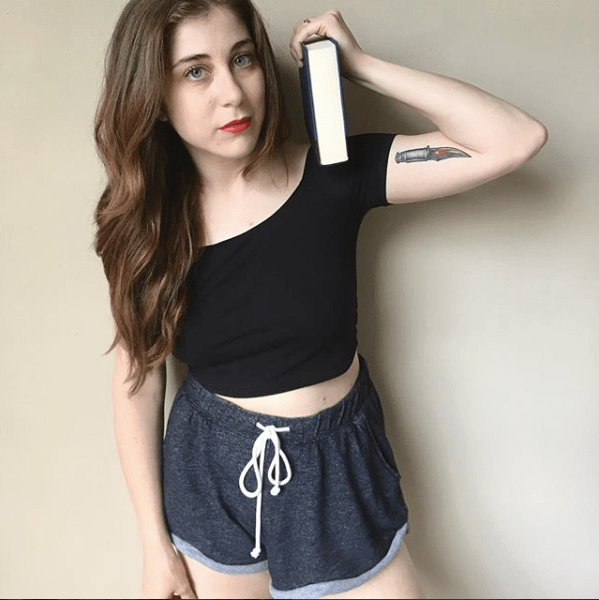
I found myself the other day taking over 50 shots of myself in different positions just thinking whether or not this post would get me over 500 likes. I mean, how is that a way to think about things and what is the message I’m sending if that’s what I’m trying to accomplish?
On one hand of the spectrum, you are gaining this traction and sharing your thoughts and sharing your life with so many people and on the other side you want to make this a career and become an entrepreneur and be your own boss. It’s a constant push and pull and a place to easily lose your sense of self and authenticity.
So what do you do in a situation like this? How do you keep yourself you in a sea of possibility and growth and what other people would consider “selling out?”
I know a lot of people (myself included) that want to take what they’re doing for free and make something real out of it. For some people it’s already a reality and for others we’re still working on getting there. And thinking about it, I think I realized that authenticity exists even if you’re trying to sell a product to people.
The funny thing about authenticity is that it’s easy to see beyond the bullshit. So how do you avoid that situation?
I have no idea. But I can’t help but to think about three steps that I hope to remember every time I wonder about my authenticity.
The first step to developing your brand is always knowing who you are. Are you a vegan selling dairy ice cream? Are you a naturalist putting on lipstick to sell to your followers? Stick to what’s true to you because in the end after wading all the bullshit, that’s all you have left.
The second step is to find those things you want to promote because it just makes sense to you and it makes you happy. Don’t sell sunglasses if you don’t like going outside and don’t wear high heels when they hurt your feet.
The final step is don’t give up. I think a lot of us want to feel “important” or more like an influencer so they say yes to everything. Don’t sell yourself short. You’re a unique and interesting human being, so follow that first step of knowing yourself and know that even though you’re not making money being a blogger, you’re influencing people’s lives.
TRIGGER WARNING: This book contains themes related to childlessness and child loss. Please proceed with caution if you are sensitive to this type of material.
This is most definitely the year of diverse reads. I’ve read so many great novels in the past eight months about other cultures, other people, other gender identities, and everything in between. I mean, I can go on about how amazing diverse books has changed my world view.
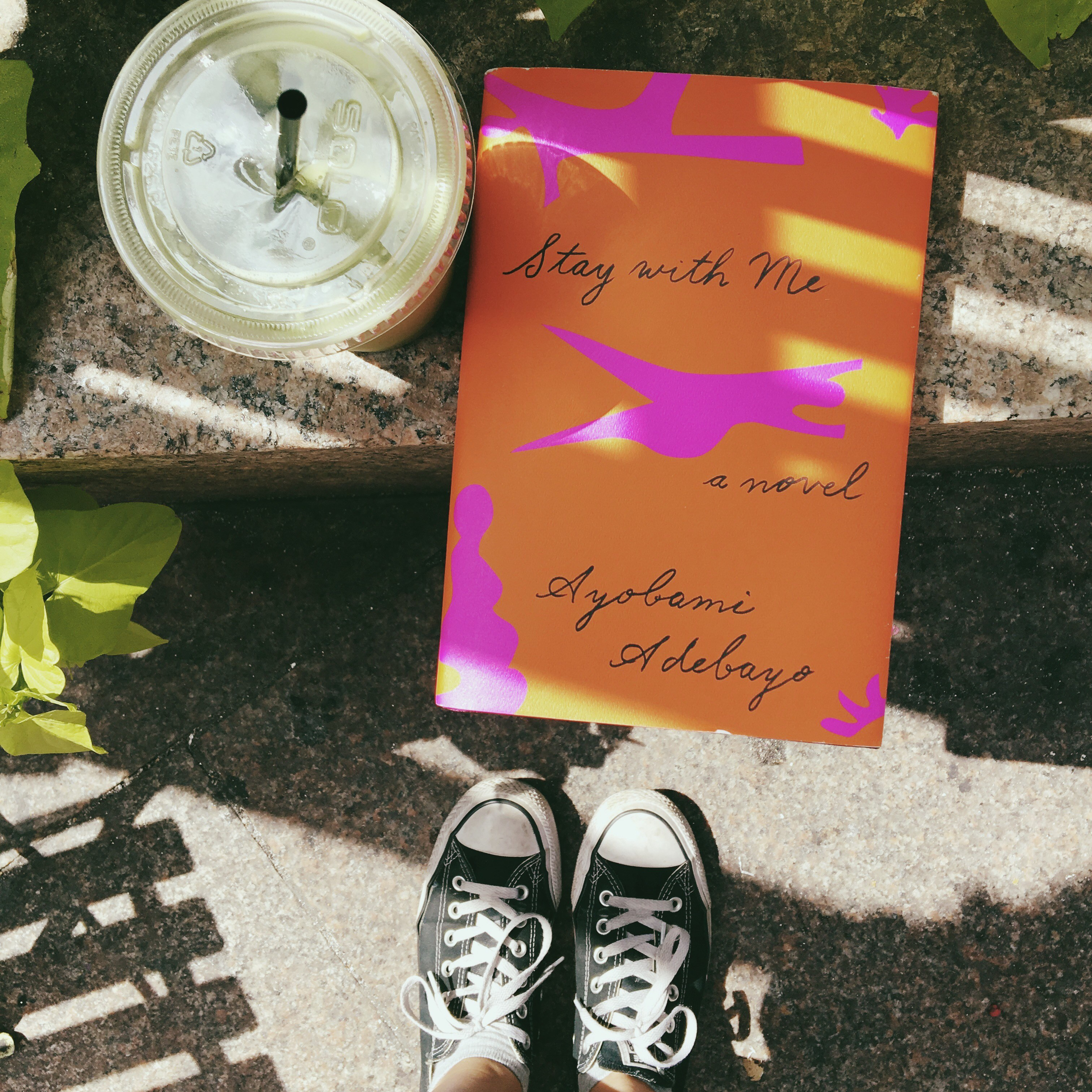
STAY WITH ME by Ayobami Adebayo is no exception to this rule. In its tiny 250+ pages, I’m so surprised by how jam-packed it is with themes.
When I first started reading STAY WITH ME, I was anticipating a novel about a woman’s struggle with getting pregnant and having children. That on its own is a pretty heavy theme and could easily be a full story.
As it unfolds this book isn’t only about childlessness, it’s also about child loss (trigger warning), societal pressures of having children, male and female gender roles in raising a child, phantom pregnancy, polygamy, adultery, and male impotence and the “blame” of impotence put on the mother. It was like the author decided one day that she wanted to cover a lot of issues two partners could potentially have when it comes to having a child.
Also, it takes into consideration the thought process for Akin, Yejide’s husband, and what he’s going through. Honestly, I’m so surprised that his narrative was also included bringing to light the kind of lengths men also go through to make their wives happy. It takes two to make a baby and Akin isn’t the typical male perspective, which made me love the book even more.
I think one of the most important themes here is the psychology of a woman desperate to have her own child. Yejide, the main character, is thrown into a polygamist relationship when her husband’s family brings home another woman her husband has married. Even though polygamy is accepted in this culture, it’s almost a catalyst for Yejide to do everything in her power to have a child. Can you imagine spending four years trying to have a child with your husband only to be “replaced” by another woman who may be able to get the job done?
So this new wife comes into the picture and completely upsets Yejide’s psyche. She finds herself asking questions like “what if she’s better at sex than I am? What if my husband finds her more attractive than me? What if she becomes the first wife and I’m relegated to the second wife?” You can only imagine the kind of urgency she must be feeling at this time and how that triggers her obsession with having a child of her own.
When she finally does start having children, everything begins to unravel. I won’t go into it because it’ll definitely spoil the book, but I will say that it’s expertly written, beautifully poignant, brings up a ton of “taboo” topics even for an American audience, and makes you think about how much you love your own mother and the kind of love only a mother can provide their daughter.
I’m so surprised from a debut author how amazing this novel is. Usually you get these debut novels that try too hard to be sophisticated and edgy. Even Toni Morrison’s first novel THE BLUEST EYE wasn’t her best work (IMO), but for Ayobami Abedayo I think this is the beginning of an amazing career for her.
I strongly recommend this book to you all and it may cause a few of you to shed some tears because while I wasn’t tearing up at the story, I was definitely gasping at every major event happening in this couple’s life.
I received this book for free from Knopf in exchange for an honest review. I am disclosing this in accordance with the Federal Trade Commission’s 16 CFR, Part 255: “Guides Concerning the Use of Endorsements and Testimonials in Advertising.
“California girls, we’re undeniable. Fun, fresh, fierce, we’ve got it on lock.” – Katy Perry
When you think of California, you think of that easy breezy place where everyone surfs and eats vegan and worries more about how they’re composting than how people in the middle of the country are starving.
However, California has its own checkered past and in the early 90s you saw something similar to what’s happening in America today. Things that Happened Before the Earthquake takes that slice of time between the LA Riots and OJ Simpson’s infamous white bronco ride to punctuate the life of a family who moved to America to follow that well-known American Dream.
Eugenia is the main character here and she couldn’t be less thrilled to be leaving her home country of Italy to watch her parents try to become big movie producers. Feeling completely abandoned by them in a huge new city, Eugenia sets out to find some small amount of attention. Whether it’s by finding another sexual partner or experimenting with drugs, you see Eugenia struggle to find herself amongst the vast canvas of the San Fernando Valley.
I have to say, it was a little bit played out and cliched. I love a coming-of-age story like the next person, but this story is as old as the decade its describing. I don’t want to be mean here especially when it comes to a book that other people may really enjoy. But I don’t buy the story of a teenage girl who comes to America and making losing her virginity her first priority.
While I was reading, I was thinking about an old friend of mine who reminded me so much of Eugenia. She was always a little indifferent about everything and always a slight arm’s distance away from you. She had a lot of different partners and tried a lot of different drugs only to feel more and more empty and a lot less seen.
Like my friend, Eugenia is trying to speak out here and find her niche, but for some reason her niche just wouldn’t stick with her. Towards the end, I found her to be a little self-absorbed and self-obsessed after abandoning the people who tried really hard to get close to her. If you tried to get near her, it was like approaching lava. The closer you got, the quicker you could burn.
And right when everything felt like it was falling apart for Eugenia, the earthquake of 1994 not only broke the ground in LA but also Eugenia’s frustration with her life. I really wanted the events around that period of time to impact her life, her family’s life, the decisions she made, think of America in a certain way. For an adult literature book, it really was almost like medicore YA.
I’m sorry, I really don’t like being mean about books because I know that authors take a lot of time and put in a lot of effort to write something compelling. I really liked this story. It’s a coming-of-age but in a place where it felt like you needed to grow up pretty quickly. It wasn’t really my cup-of-tea, but it might be yours.
Don’t give up hope for Eugenia, though. She’ll eventually find her way out of the rubble.
I received this free copy of Things that Happened Before the Earthquake from Doubleday Books in exchange for an honest review. I am disclosing this in accordance with the Federal Trade Commission’s 16 CFR, Part 255: “Guides Concerning the Use of Endorsements and Testimonials in Advertising.
There are so many cultures of people represented on this speck in the sky and all of them have their traditions and heritages and lifestyle. They also struggle. They all struggle. And struggle for some reason brings us a host of stories. There’s this famous quote that writers all around the world know which is “write what you know.”
People are extremely fascinated by the know. What do you know? What can you share?
And for a long time, the knowers wrote novels about their strife. Jane Austen wrote about the complications of love and being an ambitious woman in the 19th century. F. Scott Fitzgerald wrote about the jazz era and partying and sometimes how those parties were a little too decadent. Hemingway wrote…well, he pretty much “suffered” all his life if you’ve ever read anything by him.
People draw from their realities. It may not be the whole truth, but it’s enough truth to give you an idea of how that experience really was.
This is where diverse books comes in. You’ve got this whole world of experience and suffering and stories. You’ve got writers writing what they know. So why aren’t readers interested?
Recently I met someone who was interested in knowing how I found diverse books. I tried to recall the very moment that it happened but I think in my reality I’ve been looking for diverse reads since I was a kid. I’ve always had an eye out for these books and always tried to get my hands on them. I’ve always wanted a way to connect to my two halves and I sometimes feel that will be a search I’ll be doing my entire life.
So I tried to think about how other people find diverse reads and I was kind of clueless. Granted I could go pretty negatively into this thought, but I like to believe that people don’t read diverse reads because it’s just not available to them. They don’t know how to find it and they don’t know what to look for.
You go to Barnes and Noble and the novels on the shelves right when you walk in are representing the “best sellers” but not the “not a best seller, but it’s important so please check it out.” If it isn’t coming from a hometown Book Club or making the New York Times Best Seller List, then perhaps you may not see it. And this isn’t anyone’s fault at all!
What I’m glad to see is that this is slowly changing and it’s a great thing to behold. I’m starting to see some great novels I’ve read show up on the bestseller lists and on the shelves right when you walk into a bookstore. But our work isn’t done. What we need are for people to seek out diverse reads and advocate for them to the masses. We need to share these reads and not only preach about how important it is to read but how it affected you. Did it shed some light on a topic you knew little about? If so then I think you can say it’s doing its job.
One of the many hobbies readers like to do is share what they’ve read. “OMG I just finished reading this great book…” We love to share the stories we loved. Whether it’s a hard-hitting thriller or a soft and cuddly romance story, I always tell myself that someone took the time to write this “truth” and you are taking the time to read it and share it so why not do the same for a diverse novel?
And I know that I’m preaching to the choir here because we all read diverse books, but it’s time for us to share them. Scribble your name out of a copy of Beloved and leave it on a park bench. Tell someone how a diverse read changed the way you understood African culture and the slave trade. Share with your parents how you recently read a book about gender identity. Join a book club focused on diverse reads. All these efforts can help to shed a little bit more light to diversity in books and really help to teach everyone a little bit more about the other cultures out there.
There’s so many stories; so many interesting and compelling stories of battling the odds and finding love and setting your own path. As a reader, I want to share these stories with people. During a time in our country’s history where we’re seeing some pretty harsh things on the news and hearing pretty harsh words everywhere you go, you need this kind of representation to show people that we are just the same as everyone else. That we have stories too and we’re here to share them.
I found myself at the bookstore the other day fawning over a copy of Another Brooklyn by Jacqueline Woodson. The paperback cover of the novel looked completely different from the hardcover (which feels to me like the latest trend nowadays). It was shiny and silvery from the foil and the title of the novel was bright and bold using vibrant colors. The book reached out to you from its little stack on a shelf of other great reads.
I had bought the book back last year during the Brooklyn Book Festival. The hardcover copy was a golden hue with kids running through a sprinkler depicting summer life on the streets of Brooklyn. It made sense for the novel and it gave the book a sense of “sophistication.”
But I stared at the new cover longingly contemplating whether or not I should buy it on top of the five other novels I already picked out. I didn’t plan on buying it because I already knew I owned a copy of the book at home. Being a person on a budget, I couldn’t justify a purchase like this especially when I knew I had the other book at home waiting on my TBR to be read.
What’s a girl to do? Consider the alternatives. There’s a million reasons why you would want to buy two copies of a novel. Perhaps it’s your first novel and you want to have the ones on the shelf at your local bookstore and not the ones the publisher gives you. But in my general way, I’ve found five really good reasons to justify purchasing two of the same book.
You forgot you bought the book in the first place
Whoops, this happens all the time especially if you’re a reader. You buy a book a million years ago and you’re pretty sure you lent it to that one dude that came over your apartment for a “sleepover” and ends up being a one night stand. You’ll hate that guy forever for taking your book, but you realize you need it again.
You buy and, lo and behold, you didn’t give it to that scumbag creep. Instead, it was buried deep in the back of your bookcase almost trampled to death by the stacks of novels you added to the top of it. So you’ll have two of the same novel, not a big deal.
You’re a diehard fangirl/fanboy and you need multiple copies of the same novel with different covers
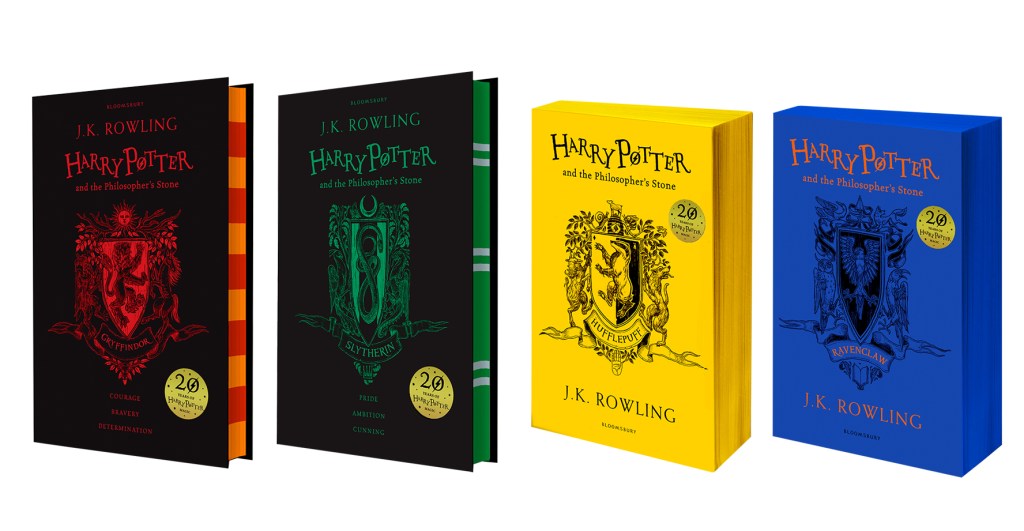
I’m talking about those Harry Potter fans. Since this year is the 20th anniversary of Harry Potter, Bloomsbury Publishing released Harry Potter and the Philosopher’s Stone in four beautiful collectible editions in all four house colors.
How can you resist buying ALL four of them even though you know you’ve been sorted in Ravenclaw a hundred times when you’re pretty sure you’re a Hufflepuff. I’m pretty sure that being 20th anniversary COLLECTIBLE editions, it would be okay right? RIGHT?!
You thought you bought one book and then Amazon sends you wtf?
I hate this with a thousand suns. You go on amazon or any other book selling venue thinking you’re buying one book, but then they send you another book.
Oh, it’s the same book alright, but this is not what you expected. I wanted to buy the book on the left because of its gorgeous cover and I heard it was freaking amazing, but what I got was the book on the right. WTF!?
Perhaps this is a symptom of online shopping and how you should always buy books in real life, but that means I have to get in my car and drive to the store and put on pants. Why do I have to do that when I can get them online?
As you can see I already went out and bought the new cover, but come on!
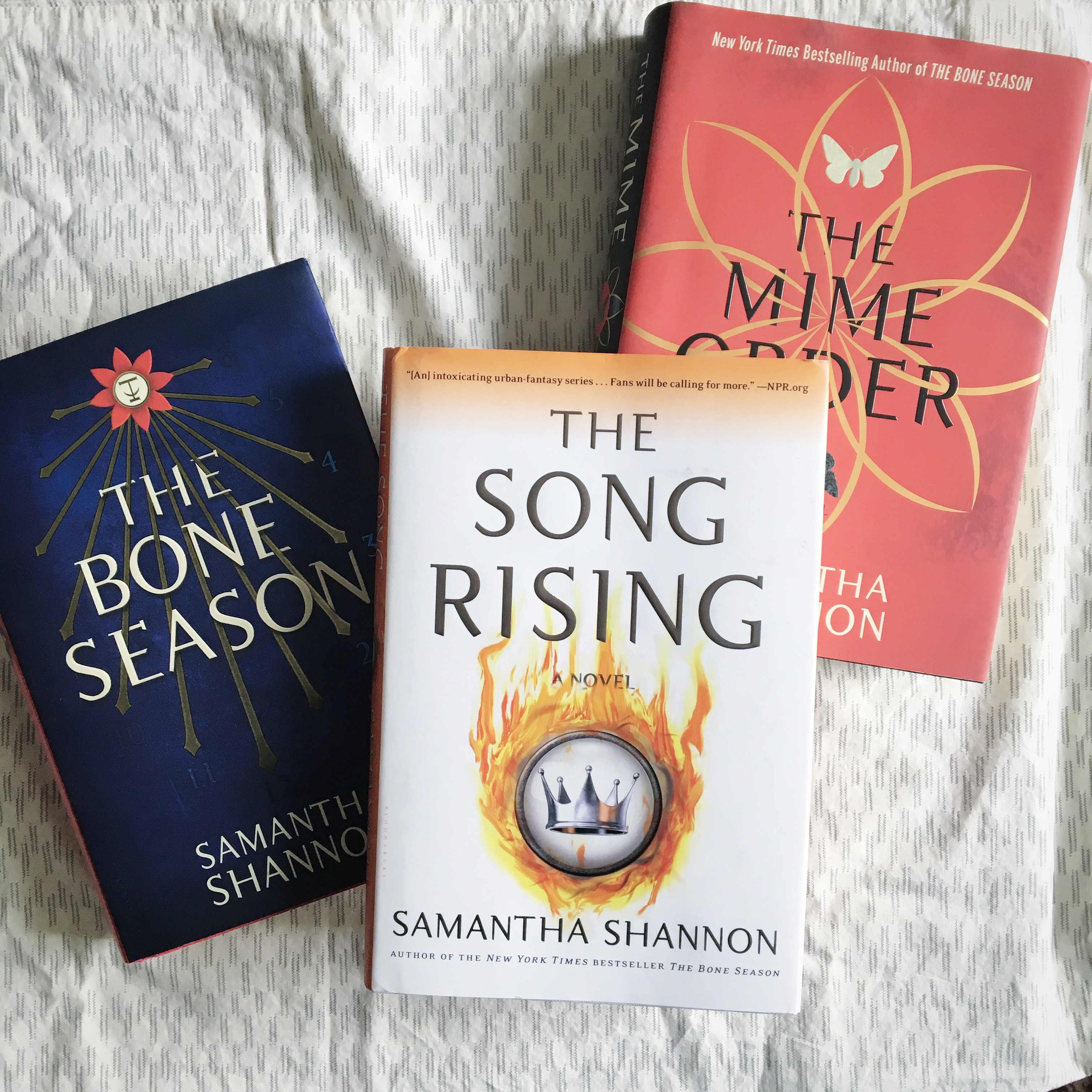
When the book publisher decides to make a book in the trilogy not match the other books
Yup, this is another big pet peeve of mine and it happens a lot. A LOT. The first time, I let it slide because I was buying Twilight novels in Paris so that I can read it on the plane ride home. Those novels don’t match, but that’s okay with me. I decided to make that decision and I was desperate to read something on the five-hour flight.
But when you’re not strapped for time and you’re trying to collect the series, you want to make sure that each book looks the same. It’s so they all look lovely next to each other on the shelf.
LOL the joke is on you because sometimes publishers like to make your editions the more expensive ones and you didn’t think the cheaper one would look so bad.
It’s a frustrating life sometimes when you’re a book collector and you want everything to be precise and exact. Form over function, that’s what I always say.
You’ve been lugging around the 800-page hardcover tome of a novel and your hands are tired of holding it up
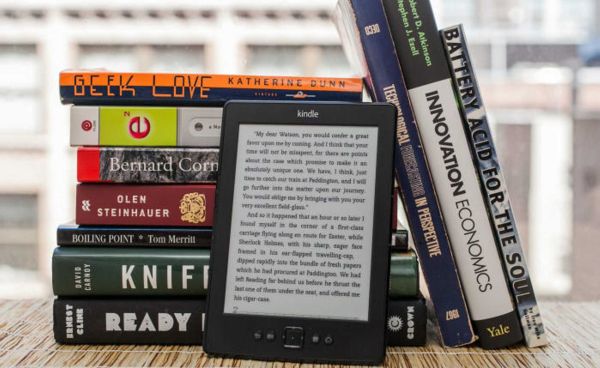
Image from masculinebooks.com
I live in New York City and one of the biggest proponents of this city is that you’re basically a pack mule. You carry everything with you and you can never find a bag cute enough to carry around tome. I legit wear a backpack every single day and not a cute one.
Because we carry everything, it’s always nice to not have to add another big thing to that list like, say, a 900-page tome by some famous author who’s books have been a world-reknown series. So I used to buy all my books that were more than 500 pages long on my Kindle. It makes it super easy to carry my books without having to break my back.
However, somewhere at the midpoint of any Kindle-based novel I read, I get this longing for an actual novel for me to hold with paper pages that I can turn and feel the ache of my fingers trying to keep the weight up. Honestly, I’m pretty sure that my hands and fingers are stronger from holding up books on a crowded subway.
So what do I do when I get that longing feeling? I buy the actual book. But I justified this purchase with math:
You see, the average novel on Amazon is about $10 less than the cover cost. Kindle books are only $9.99 for most unless you’re getting one of those bigger blockbuster hits. So, if you buy a book on both the physical format and the ebook format, you’re basically buying one book. All that money would have gone towards the one book anyway.
Or you just tell yourself that this is going to be a good one that you want to keep an actual copy of for your future self to re-read.
I do hope you enjoyed my fun little post about the ways you can justify purchasing the same book twice. Have you ever found yourself in this dilemma? What kinds of justifications have you used?
Every month, I feature a young person who loves to read. It could be about diversity, gender identity, being a human, being a reader. It’s to highlight some people who love to hug a book and imagine a better world for everyone. Why call yourself a reader when you can be a #badassbookbabe?
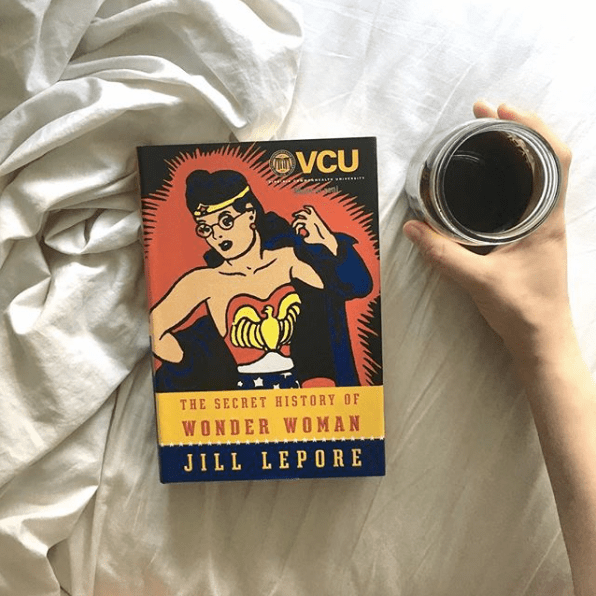
This month, I interviewed Sara-Jayne of @bookish.harpy. Sara-Jayne has got a great bookstagram account where she promotes women and diversity through her reads. She’s also running a great photo challenge this month, so I thought it’d be great to hear from her some words of wisdom and insight to what makes her read.
Introduce yourself and your mission with your Instagram?
Hello! My name is Sara-Jayne and I’m a feminist bookstagrammer from Pittsburgh. I started my Instagram account in January to document my #ReadWomen2017 project. For the entire year, as a form of passive resistance against an administration that seeks to silence the voices of women and minorities, I’m only purchasing and reading books written by women (with a particular emphasis on women of color and LGBTQIA+ women).
Why did you decide to dedicate your year to reading female authors?
When the results of the 2016 American election came in, I was angry. Furious, really. And completely disgusted that the voices of women and minorities keep getting ignored while the voices of old white men keep getting louder. So I decided to spend an entire year only listening to the voices of women and minorities, in the hopes that I could spread the diversity love while educating myself to become a better intersectional feminist.
What is the one thing you want to get out of reading?
For me, reading is a way to connect with and learn from different people. I want books to challenge me, to make me rethink my opinions. But then sometimes, I just want to get lost in a book where badass lady leads are wielding swords and going on adventures. It’s a balance, I guess.
Coffee or tea?
It sort of depends on the season and time of day. I drink coffee every morning, but love curling up with a good book and a cup of tea on a cold evening.
If you’d like to be considered as the next bad ass book babe, tag your posts with #badassbookbabes on Instagram.
My grandparents were married during the Japanese occupation of Korea. There’s only two remaining photos of my grandparents from that time both taken on their wedding day. The whole family was out in front of their house standing to take the picture while a massive Japanese flag waved in the background.
My family background is Korean and I’ve always been fascinated with this photo and what it means to my grandparents. They never really talk about this time, but you know that they’ve been affected from it when my grandmothers keep telling me to eat more and don’t waste. When you have next to nothing, you waste nothing.
I’ve only heard a few stories from that time period like how my grandmothers sold whatever they can find to make ends meet and my grandfather’s family, being from the North, escaped to China and sold his blood to help out my grandmother. My grandmothers still speak in Japanese and you can even catch them calling back “hai!” when you address them. Thinking of these stories now brings tears to my eyes.
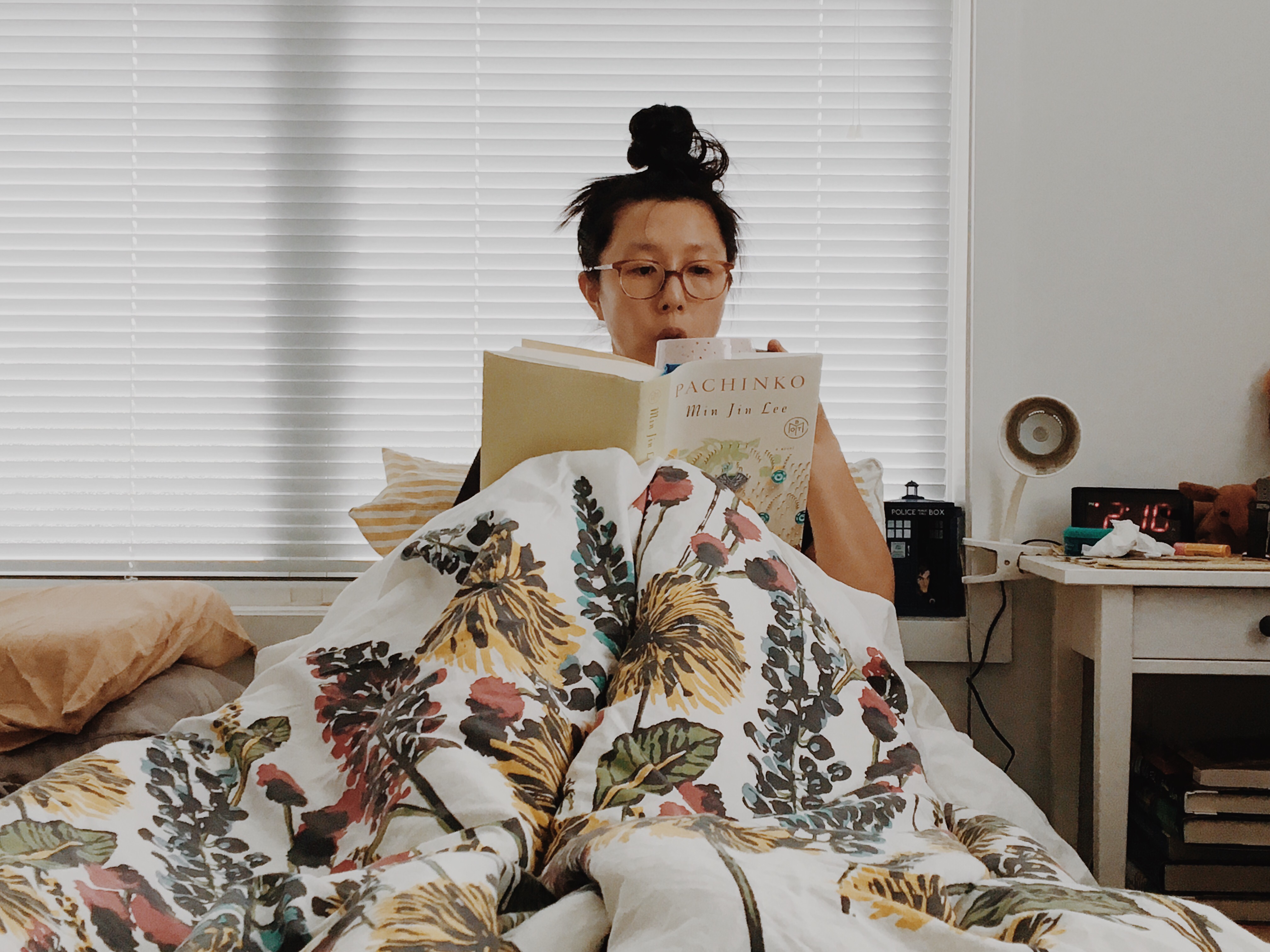
And then Pachinko appeared and I wanted to know more.
Min Jin Lee is an incredible author with her own voice and style of writing. While she is eloquent and simple, I found myself a little disappointed with the story. Don’t take that statement to be the end-all of this review. While this book didn’t work for me, I do still believe it is a beautiful portrayal of Korean people and how they survived during some of the worst times in our history. Bear with me because I’m going to be a little scatterbrained writing up this review.
I approached this book as a Korean reading about Korea wanting to know more about my family and their heritage. I wanted to hear about the persecution and the injustice and most importantly, the racism. I wanted to hear about the soldiers who died during the Korean War and the families who subsisted by selling their blood like my grandfather.
These themes were definitely in Pachinko, but not in the sense I imagined. Perhaps this standard was too high because what I found was a story about a Korean family met with many challenges in their life, but managing to stay together as a unit for as long as they could through a country completely foreign to them and yet they couldn’t see themselves anywhere else.
I met someone the other day and I described to them the book I was reading. “Oh, I never heard that about Korean people in Japan. How crazy?”
I was surprised by this comment and now looking at the reviews written on Goodreads, I’m surprised by what people are saying (really, Roxanne Gay?! Really?!) because I had already known this and I guess this isn’t a fact they teach in History class when you’re in high school. Instead, you read about how Japan bombed Pearl Harbor and how all the Japanese Americans were placed in internments camps somewhere in the middle of the country. But all the way on the other side of the world, Koreans were struggling to fight off the Japanese and then themselves.
So if you’re a person who hasn’t read about Korean history in the early 20th century, this book may be an education for you. You get to read why my dad, to this day, still hates Japanese people. You get to read how Korea hasn’t seen a day’s rest since WWII and how communism broke us apart and we still haven’t figured out how to piece that together.
You get to read about how Koreans tried to make ends meet in Japan by working with the yakuza or making money through gambling rings. You get to read about how Koreans were without a country. No longer accepted by Koreans and would never be accepted by the Japanese.
But I think this truly resonated with me the most out of the entire book and was perhaps one of the biggest themes of the novel. As an Asian American born in America, my home is not Korea. You can say that my home is America, but I still get asked “where I’m really from” and the few people that know some Korean try to speak it with me like I’ll react and be surprised at how good they are at it. I can barely speak Korean and I can’t read or write it. I went to Korea for the first time in my entire life THIS YEAR.
I’m from America lost in a world where the color of my skin and the way I was raised doesn’t match that of most people with deep American roots. Where I’ve assimilated myself to be a part of this country and blend in as much as possible and yet I still stand out. I may not be in Japan, but I know how it feels and Min Jin Lee hit that nail right on the fucking head.
If you’re thinking about reading this and wanting to know more about Korean history, do it. This book will make you see the kind of racism that lives outside of America; the kind they don’t teach you to march about because the best thing you could do is brush it off and continue to survive. Approach this book with an open mind and an open heart and understand that while my grandparents stood under a Japanese flag on their wedding day, they always stayed true to their country.
I bought way too many books this month and it’s only day 9! At this rate I’ll be building a fort and living in my books. Also I’ve been pretty lazy with reading and instead have been watching The Bachelorette. I’m still sore about the ending!
In an effort to keep myself in check and read more books, I’m making myself a TBR for August. I don’t normally do this because I feel like I always end up changing my mind or reading something else, but this month I’m determined to read all of these books. Don’t try to stop me, Smee!
It’s a pretty long list and it’s got some great reads. I know I won’t get through everything but at least I’ll get through most. Wish me luck!
You can find out more about the books I’m reading after the jump!
I’ve been hearing a lot of things about this book, so when Simon and Schuster sent over a copy for me to read, I figured why not give it a chance.
Disclaimer: This review is my honest thoughts and not in any way shaped by Simon and Schuster.
I’m not a fan of thriller novels. The last one I read was Gone Girl by Gillian Flynn and if you’re into reading books, you’ve probably heard about it (shivers).
I think it’s something about that edge-of-your-seat-who-dunnit that I’m not a fan of because it weirdly gives me anxiety. Look at that, I’m a bookish person who has anxiety about life and death.
However, this novel is not your typical thriller. In fact, it’s not thriller enough and for some folks, I’m seeing some low-stars on Goodreads because of it.
Luckily for me, I’m big into literary fiction, so I decided to read it in that lens instead of as a thriller and what I found was a remarkably well-written novel about three characters coming to grips with who they are in the midst of a young girl being murdered.
For me, this is my kind of thriller. I love reading character-driven novels and if you’re looking for more of that and less of the blood and gore and anxiety-driven stuff then this might be Thriller Lite™ just for you.
Danya Kukafka is brilliant as a writer. Being a book editor may be helping her in that department, but she’s definitely got her own voice. It’s interesting and provocative without having to push the envelope on the story. You’re following these characters through the novel and you’re seeing how they cope with death.
There were three intertwining stories throughout. There was the boy who stalked her, the girl who loved her before she hated her, and the police officer set to help on the case amongst the challenges he faced being somewhat involved.
I found myself trying to guess which of the three was the person that killed Lucinda in the beginning of the novel. Obviously, you would think it was the stalker boy because who stalks a freshman in high school? Or it could have been the girl that hates her and was motivated to end her life, but do you think she could do it?
When I read in the end who it really was, I think that was when it snapped into place the truth of the novel; it doesn’t matter. The murder itself was a maguffin to the real story here. It played as the basis for these characters to grow and find themselves, but the murder wasn’t the real plot.
I love it when a novel makes you think more than just on the surface. I love when a novel lulls you in on this great journey only to show you that the journey has been inside yourself the entire time.
It was quite an adventure and a fun one at that. Yeah, there were a few issues with the length of the novel and the dragging, but if you’re a fan of true crime and thriller stories then this might not be the one for you.
You can find out more about this book on Goodreads.com
Yay! Happy Anniversary to me and my blog and writing posts for a year. This year has been really trying with experimentation and lags in posts, but I’ve been around for a year and I want to stick around for a few more years!
I’m hosting a giveaway on my Instagram account, so go check it out to get some free books from me!
Here’s to another year of posts and journeys with me and my books.












 Simone and Her Books